
Last updated November 15, 2026
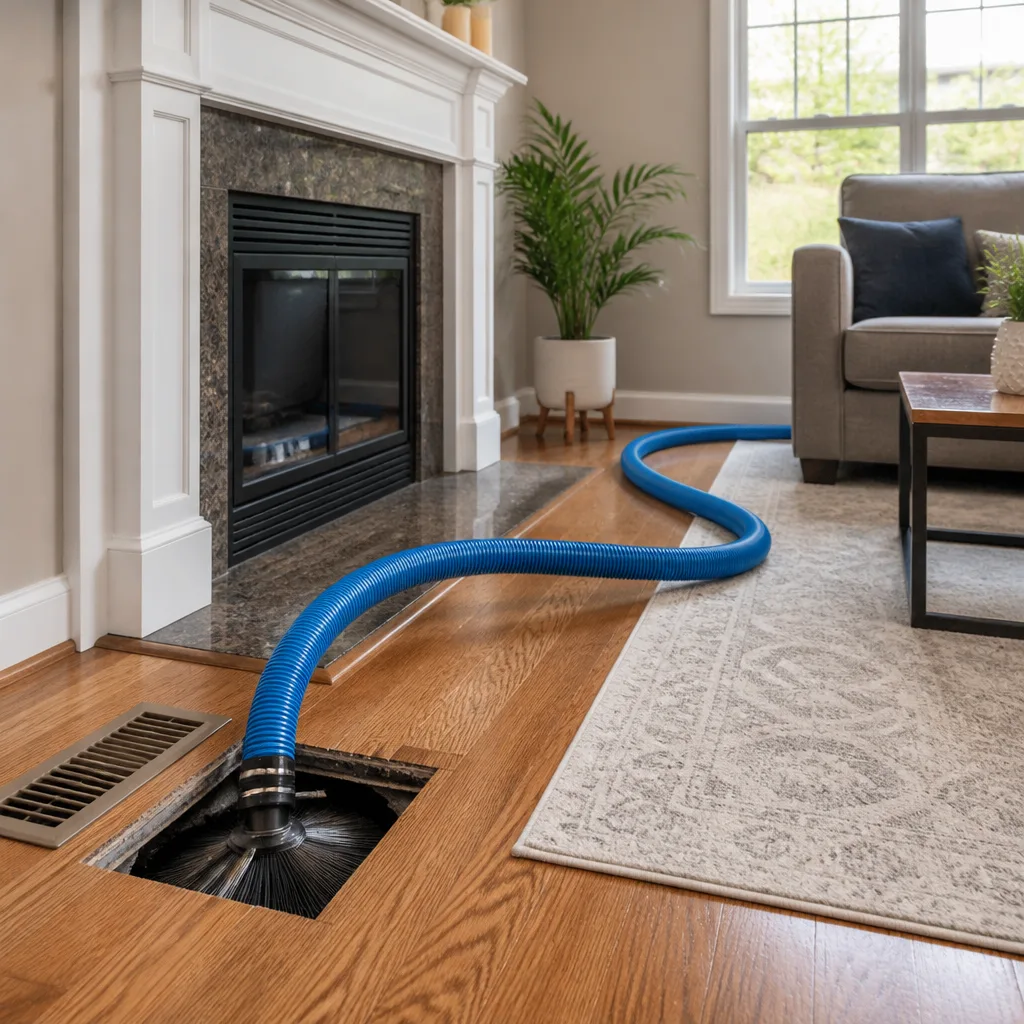 Whole-home duct cleaning
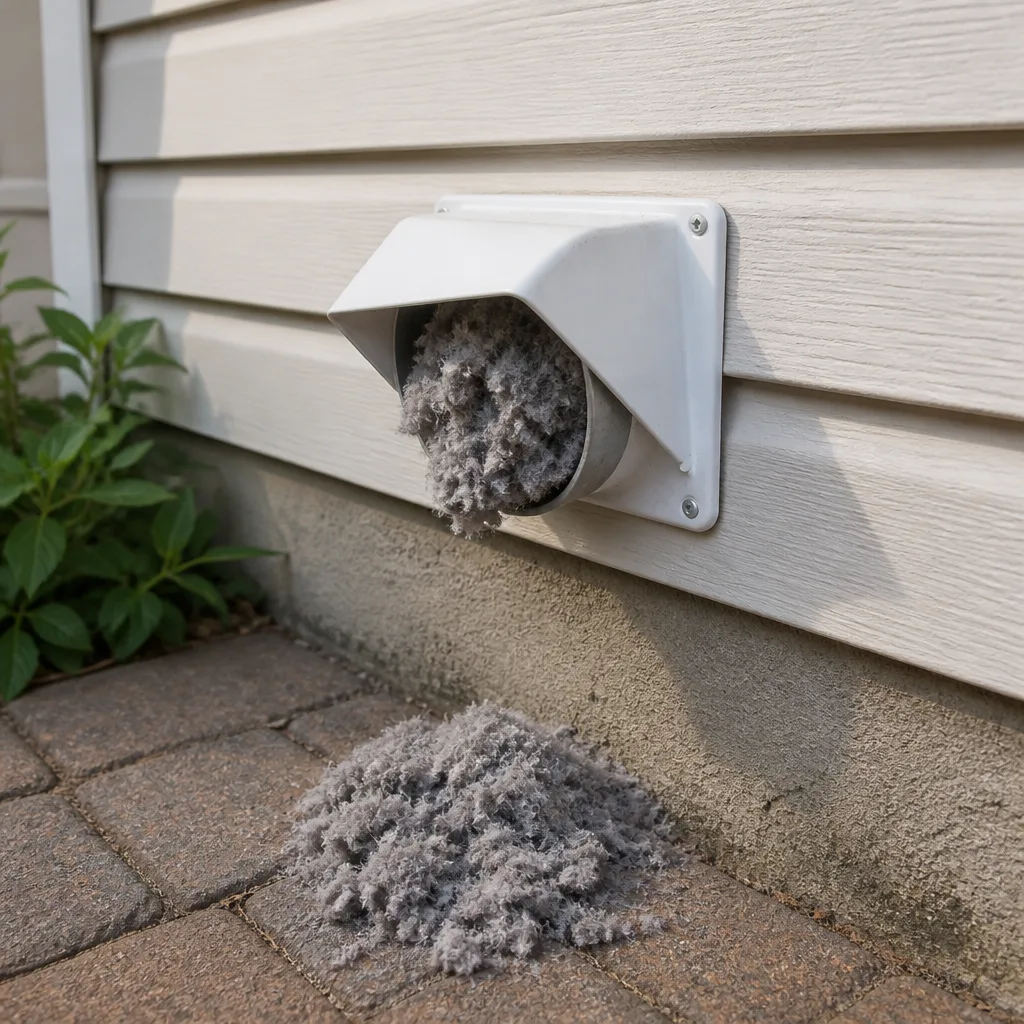 Dryer vent cleaning
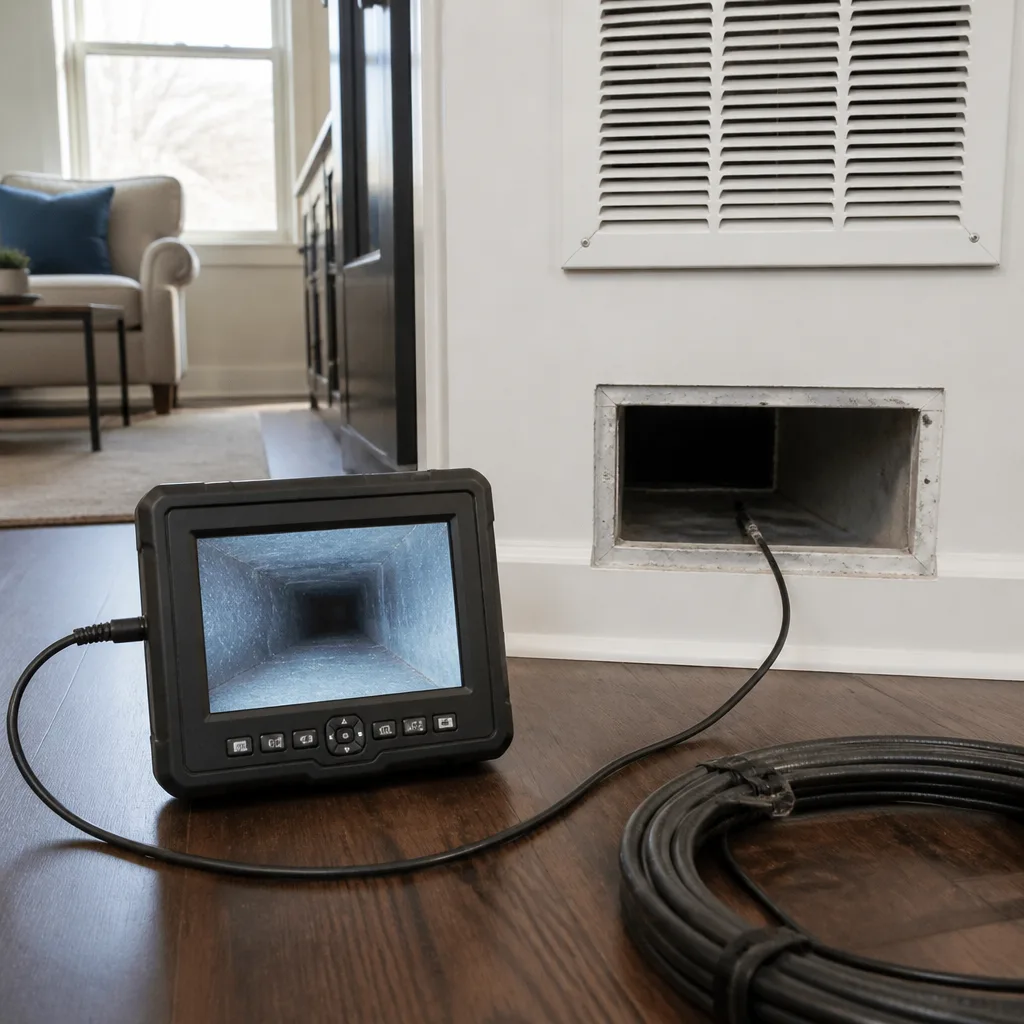 Camera inspection
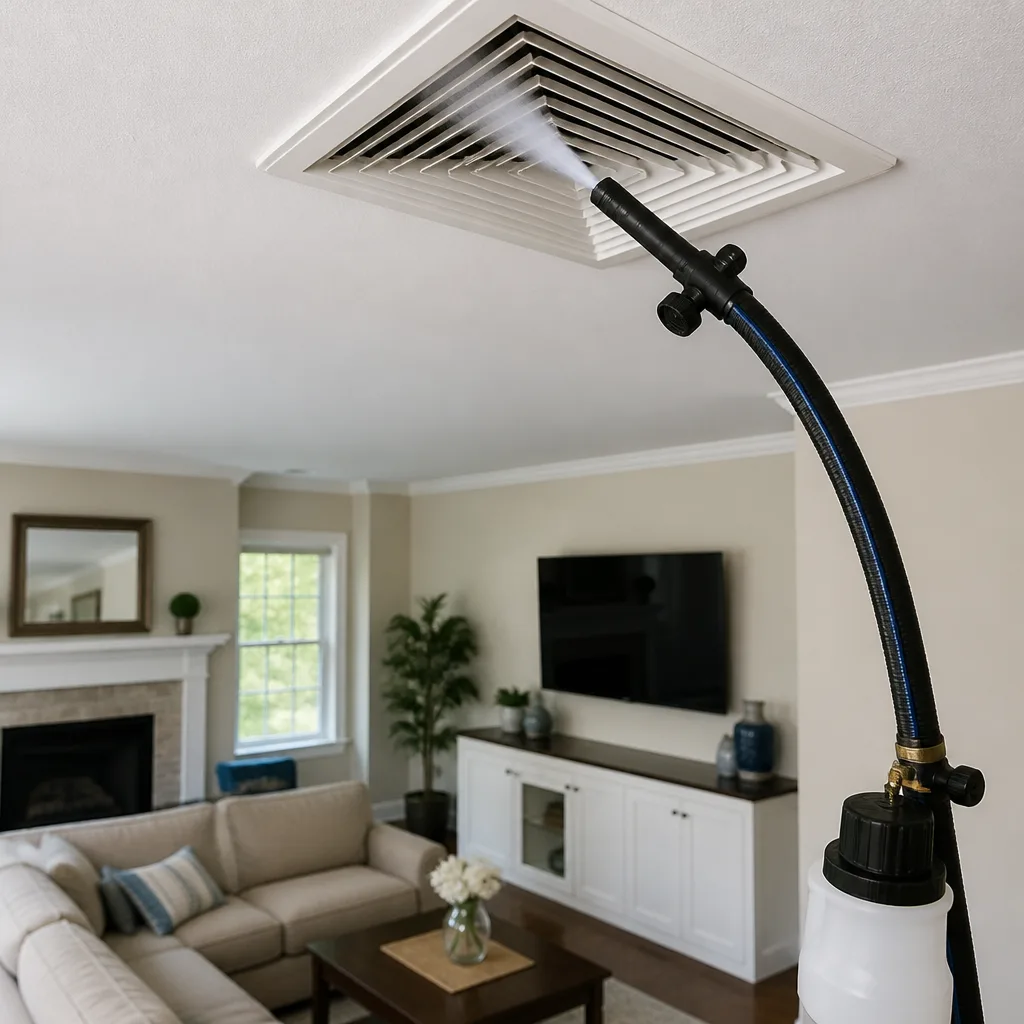 Sanitizing & deodorizing
Whole-system duct and dryer vent check with before-and-after photos - you see exactly what came out of your vents
That "$99 whole-house special" is a bait ad - the real number appears once they are in your hallway, or the "clean" is a shop-vac at the register. We photograph the inside of your ducts before and after instead.
Air Duct Repair Troubleshooting in Gresham: Common Problems and How to Fix Them
A room that won’t cool below 78°F in July isn’t always an HVAC problem. Often it’s a collapsed flex duct run or a disconnected boot the thermostat can’t see and nobody finds without checking airflow at the source. Homeowners replace thermostats, add window units, and call out AC techs who test the compressor and leave scratching their heads. The ductwork never gets looked at. This guide teaches you to read the symptoms your house is already giving you: the room that runs hot, the musty smell in the hallway, the rattle behind the wall, the bill that climbed without explanation. Each signal points to a specific type of duct failure, and each failure needs a different fix. By the end you’ll know what to check, when it’s a real repair, and when the layout itself is the problem.
Quick Answer
Most air duct problems in Gresham come down to three failure types: collapsed flex duct, separated rigid duct joints, and failed mastic seals at boots and connections. Each has a distinct symptom profile that you can identify with a simple register paper test before calling anyone. A true repair – resealing, reconnecting, or replacing a failed section – is usually enough, but if rooms stay unbalanced after the repair, the duct layout itself needs redesign.
Styles & brands we work with
- Whole-home duct cleaning
- Dryer vent cleaning
- Camera inspection
- Sanitizing & deodorizing
Table of Contents
- Symptom-to-Failure Mapping: What Your House Is Telling You
- The Paper Test: A Basic Duct Pressure Check at Your Registers
- Flex Collapse, Rigid Separation, and Mastic Failure: Three Different Repairs
- Why Gresham’s 1970s – 1990s Housing Stock Skews Toward Certain Failures
- Repair vs. Redesign: When Symptoms Point to the Layout Itself
- Moisture, Odor, and Indoor Air Quality Signals
- When to Call a Professional
- Frequently Asked Questions
Symptom-to-Failure Mapping: What Your House Is Telling You
Duct failures don’t hide well. They show up in patterns, and the pattern tells you which failure you’re dealing with. A room that’s consistently hot while the rest of the house is fine is not the same problem as a room that’s hot only on certain days. The first points to a supply-side defect on that branch. The second often points to a return-side imbalance. Read the symptom carefully before you assume a fix.
Here’s the mapping we walk people through when they describe their problem over the phone:
- One room runs 5 – 10°F hotter than the rest, year after year. Almost always a collapsed or kinked flex duct on that branch, or a disconnected boot at the register. The air is being delivered but not reaching the room.
- Rattling or whooshing behind a wall or ceiling. Loose flex duct that’s vibrating against framing, or a section that’s partially detached and flapping in the airflow. Common in attic runs where the duct isn’t properly supported.
- Musty or dusty smell when the system kicks on. A leak pulling air from a crawlspace, attic, or wall cavity back into the supply side. That air carries whatever’s in those spaces with it.
- Utility bill climbing without a rate change. Leakage. The system is conditioning air that never reaches the room, so the blower runs longer to hit the setpoint.
- Weak airflow at every register, not just one. A trunk-line problem rather than a branch-line problem. Could be a crushed main trunk, a disconnected plenum, or a filter and blower issue that mimics duct symptoms.
- Whistling at a specific register. Usually a boot that’s separated from the branch, or a register that’s too small for the airflow being pushed to it. Sometimes both.
The reason this mapping matters is that Gresham homes are rarely dealing with one failure. A 1980s split-level might have a collapsed flex run in the attic, a boot that pulled loose in the crawlspace, and mastic that’s cracked at three or four joints. The symptoms interlock. Fix one and another becomes visible. That’s not a sign the first repair failed. It’s a sign the system is aging together.
If the pattern points to multiple failures, or the symptoms have been present for years, it’s worth bringing in a professional for a full-system diagnosis. We connect homeowners in Gresham with independent pros who test pressure and confirm failure points before quoting anything.
The Paper Test: A Basic Duct Pressure Check at Your Registers
You don’t need a manometer to get useful information about your duct system. A single sheet of toilet paper or a lightweight tissue will tell you a lot about which registers are getting real airflow and which are being starved. It won’t diagnose the exact failure, but it will tell you where the problem lives. That’s often enough to make an informed call.
Here’s the process, step by step:
- Turn the system on and let it run five minutes. Give the blower time to stabilize and go through its startup sequence.
- Hold a single sheet of tissue against the face of each supply register. Note how hard it’s pulled against the grille. A strong register will hold the tissue flat. A weak one lets it flutter or drop.
- Rank the registers from strongest to weakest. Write it down if you have more than ten; the pattern matters more than any single reading.
- Repeat at the return registers. Return airflow should be strong and steady. Weak returns point to a collapsed return trunk or a filter that needs replacing.
- Look for imbalance patterns. If the weakest supplies are all on one side of the house, or all on one branch line, that tells you where the fault is. If weakness is random across the house, the problem is likely at the trunk or filter.
- Repeat the test after replacing the filter. A clogged filter can mimic duct failure by starving the whole system. Rule that out before you assume the ducts are the issue.
What you’re looking for is not a perfect result. Older homes in Gresham rarely deliver uniform airflow, especially if the system was designed for a smaller footprint than the house currently occupies after a remodel. What you’re looking for is disproportionate weakness: one or two registers much weaker than the others, or a whole zone running weak while the rest of the house is fine.
For a more thorough picture, a professional will use a calibrated flow hood or a pressure gauge at the plenum. That gets you actual CFM numbers per register and a static pressure reading at the air handler. But the paper test is genuinely useful on its own. It tells you whether to look at a branch or the trunk. It tells you whether the system has a filter problem masking as a duct problem. And it gives the technician you call a head start on where to look. If your supply registers are all strong and your house is still uncomfortable, that’s a pressure balance issue, not a delivery issue, and cleaning the ducts won’t fix it. In that case, a round of air duct cleaning may still be worth doing for the air quality, but the comfort problem needs a different answer.
Flex Collapse, Rigid Separation, and Mastic Failure: Three Different Repairs
Most Gresham duct failures fall into one of three categories. Each has a distinct cause, a distinct symptom, and a distinct repair approach. Treating them all the same way leads to callbacks and repeated problems.
Flex Duct Collapse
Flex duct is the flexible, insulated plastic tube you’ll find throughout attic and crawlspace runs. It’s cheap, fast to install, and extremely common in residential construction from the late 1970s onward. Its weakness is that it crushes easily. A technician walking across the attic, a sagging run that kinks at a bend, or insulation that’s settled on top of the duct can all collapse it. Once collapsed, airflow drops to a fraction of design capacity for that branch.
Repair means replacing the collapsed section, not trying to “open it back up.” Flex duct that’s been crushed for a while has lost its internal structure and will re-collapse. The proper fix is a new section sized correctly, supported properly, and routed with gentler bends. We work with professional-grade equipment from brands like Rotobrush and Nikro for this type of repair, and we can also install proper supports and re-route the branch to prevent the same failure from happening a few years down the line.
Rigid Duct Separation
Rigid sheet metal and duct board are older systems – typically 1970s through 1990s in Gresham – and they’re joined with mechanical fasteners and sealant at the seams. Over decades, temperature cycling and vibration work those joints loose. When a rigid trunk separates at a plenum or a branch takes off, the airflow escapes into the attic or crawlspace instead of the house.
Symptoms are usually dramatic. A whole zone of the house goes cold or hot at once, and the utility bill jumps. Repair means reconnecting the joint, sealing it properly with mastic or foil tape rated for the temperature, and supporting the duct so it doesn’t drift back out of alignment. This is a true repair, not a cleaning issue, and it needs to be done by someone equipped to work with rigid duct and access tight attic and crawlspace spaces.
Mastic Joint Failure
Mastic is the grey paste used to seal duct joints, boots, and plenum connections. It’s the standard sealant in modern duct work, and it’s very effective – until it dries out, cracks, or peels loose. In Gresham’s climate, with our wet winters and hot dry summers, mastic joints endure a lot of thermal movement. Ten to fifteen years is a realistic lifespan for a mastic joint before the first cracks appear.
Failed mastic is the most common source of duct leakage we see, and it’s also the easiest to miss because there’s no dramatic symptom. You just get a slow creep in the utility bill, a slightly musty smell when the system starts up, and a bit more dust in the house than usual. Repair means scraping the old mastic off, cleaning the joint surface, and resealing with fresh mastic. On a full-system inspection, a technician will reseal every accessible joint, boot, and plenum connection at once.
The three failures require three different tools and three different skill sets. That’s why “duct cleaning” alone doesn’t fix them. A cleaning crew that pulls out debris and then leaves without checking joints and boots will tell you the ducts are clean and the problem isn’t their job. In our view, that’s why repair capability matters as much as cleaning capability. If you have duct damage, you need someone who can actually fix it, not just report on it. Our duct cleaning Gresham team connects you with independent pros who handle both.
Why Gresham’s 1970s – 1990s Housing Stock Skews Toward Certain Failures
Gresham’s residential building stock has a particular shape. Much of the housing was built between 1970 and 1999, during the city’s most intense growth decades. That matters for duct troubleshooting because each era of construction has its own characteristic failure patterns. A 1980s split-level in the Rockwood or Centennial area doesn’t fail the same way a 1990s single-story in Powell Valley does.
Here’s what we see in Gresham homes by construction era:
- Late 1970s and early 1980s builds (common in Rockwood and North Gresham): Rigid duct trunks with flex branch runs. The trunks are often fine; the flex branches are the first to fail because the boot connections at the register were done quickly and the flex wasn’t always routed with proper support.
- Mid-to-late 1980s (Pleasant Valley, Kelly Creek, some Centennial): Transition period where more of the system moved into attic space. This is where attic-run flex duct is most common, and where collapsed runs are most frequent. Summer attic temps in Gresham can hit 130°F or higher, and that accelerates flex degradation and mastic drying.
- 1990s builds (Powell Valley, Gresham Butte, the southeastern neighborhoods): Better insulated duct and more consistent mastic application, but with more complex layouts. Multiple zones, more branch runs, more boots, and more joints. The failure count per system is higher, even if each failure is less severe.
The other Gresham-specific factor is climate. Our wet winters drive moisture into crawlspaces, which is where the return trunk often runs. A return trunk that pulls air across wet crawlspace soil carries that moisture into the house. That’s a duct problem – specifically a poorly sealed or disconnected return – but the symptom shows up as musty smells or high indoor humidity. It’s also why we recommend adding an Aprilaire or Honeywell humidity control component when the system’s being repaired. The duct fix without a humidity answer often leaves the smell in place.
Attic runs are the other spot that fails faster here than in drier climates. Gresham’s summer attic heat combined with winter cold cycling stresses mastic joints and flex duct more than a stable-climate installation would. It’s worth having attic runs looked at every few years, especially in Powell Valley and Pleasant Valley homes where the bulk of the duct system lives up there.
Repair vs. Redesign: When Symptoms Point to the Layout Itself
Not every comfort problem is a repair problem. Some are design problems. The distinction matters because a repair on a design problem doesn’t work – you’ll fix a collapsed branch, and the room will still run hot because the branch was undersized from the start. Learning to tell them apart before you spend money is the point of this section.
Here’s how to distinguish repair from redesign:
- Look at when the problem appeared. A problem that started a few years ago in a house that used to be comfortable points to a repair. A problem that’s been there since the house was built, or since a major remodel, points to a design issue.
- Check whether the symptom is proportional. If one room runs 8°F hot while the duct behind it is intact, the issue is likely that the branch is undersized for the heat load in that room. A true repair fixes a broken duct; it doesn’t increase a duct’s capacity if it was never large enough.
- Look at major remodel history. If a room was added, a wall moved, or a second story was bumped up in a 1980s Gresham ranch, the original duct system is almost certainly underproportioned for the new layout. This is a redesign job, not a repair.
- Check the return side. Many older Gresham homes have a single return sized for half the current conditioned square footage. That starves the supply system no matter how well the supplies are sealed. Adding a return or rebalancing the returns is a redesign task.
- Verify the system was ever balanced. Manual balancing dampers installed and left open are effectively no balancing at all. A technician who knows what to look for can tell you whether dampers exist and whether they’ve ever been adjusted. If not, a rebalance may solve the problem before you consider a redesign.
In our experience, about one in four comfort calls we see in Gresham turn out to be a mixture: a real repair on one branch plus a design imbalance on another. The repair gets you half the improvement. The design fix gets you the rest. Being honest about which one you’re dealing with saves you from paying for one and expecting the other. Our technicians have up to 15 years of experience, and they’re trained to walk through the difference with you before work begins. One flat price per system, agreed before work starts, and before-and-after photos of your own ducts when the job is done.
If a redesign is genuinely needed, that’s a referral to an HVAC design professional, not a duct repair. We tell people this directly rather than taking a repair job that we know won’t fix their comfort issue.
Moisture, Odor, and Indoor Air Quality Signals
Airflow problems get attention because they make a room uncomfortable. Moisture and odor problems are subtler but often indicate duct failures that have real indoor air quality consequences. If you can smell a difference in the air when the system starts, that’s a signal.
Here’s what we watch for:
- Musty smell on startup. The duct system is pulling air from a damp space – usually a crawlspace, an attic in wet weather, or a basement. This is almost always a return-side leak or a disconnected return trunk.
- Dust buildup on horizontal surfaces after cleaning. If the house dusts up faster right after regular cleaning, the supply side is leaking. Leaks pull dirty air into the air path; the dust lands wherever the register blows.
- Persistent high humidity even with the AC running. The system is pulling damp outside or crawlspace air into the return. Duct leakage on the return trunk lets 10 – 30% of the return air come from the wrong place if the leak is significant.
- Occasional sewer or chemical smells. Return duct leakage into a garage or crawlspace can pull exhaust fumes back into the house. This is a serious concern and needs to be addressed before the system is used again.
- Worsening allergy symptoms at home but relief when away. Could be filter and duct condition. Could be a return-side leak. Could be a matter of installing a proper filtration component, which is where brands like Honeywell and Aprilaire come in.
The fix for most of these is the same: locate the leak, repair or reseal the duct, and verify with a proper pressure test afterward. Once the ducts are sealed, adding a filtration or humidity control element through a Honeywell or Aprilaire-compatible system is a real improvement – not a marketing add-on. But the filtration only works if the ducts are sealed first. A high-MERV filter upstream of a leaking return just makes it harder to pull air and doesn’t improve air quality where it matters.
Dryer vents are the other IAQ and safety concern worth mentioning here. A clogged dryer vent is a recognized leading cause of residential fires, and it’s easy to forget because it’s separate from the HVAC system. If you haven’t had it looked at in a while, dryer vent cleaning is a small job with a real safety payoff, and it’s one component that a full-scope duct provider should handle rather than sending you to another contractor.
See the difference
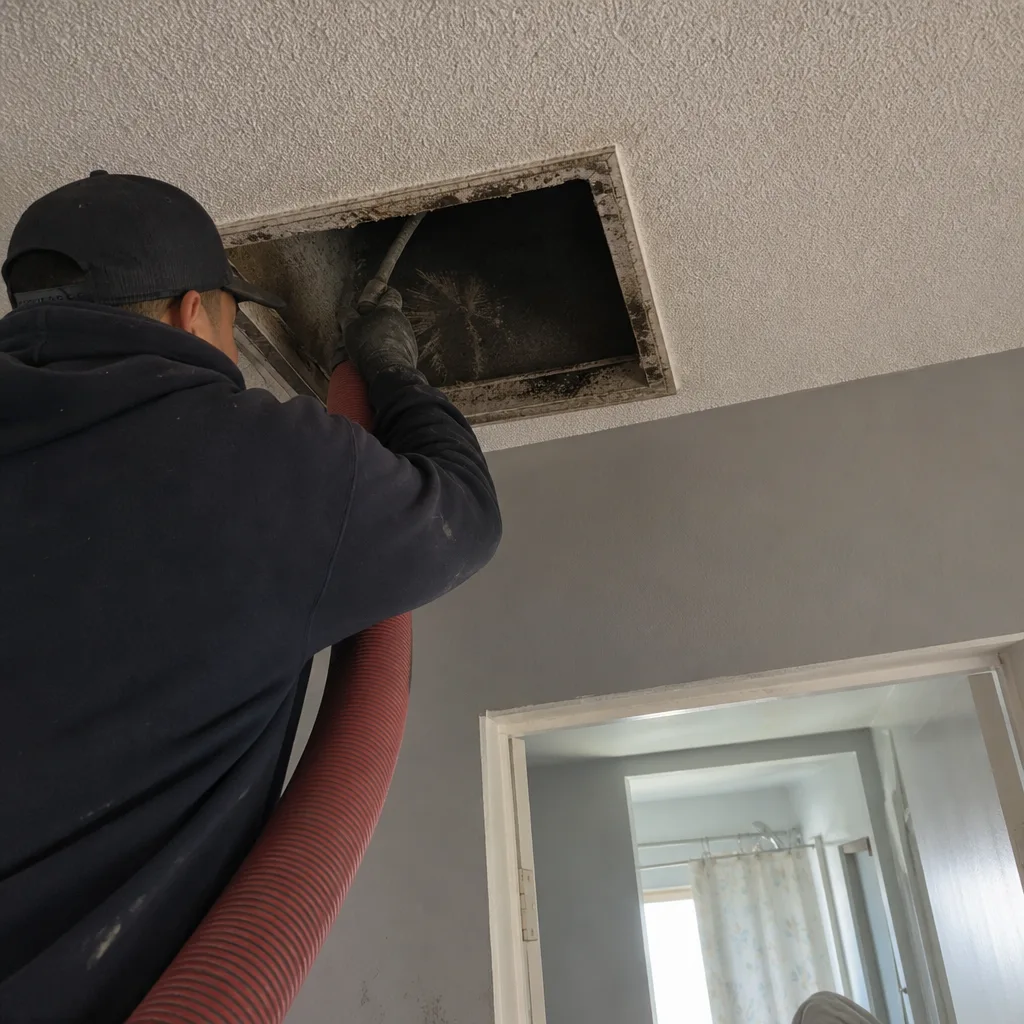 Before
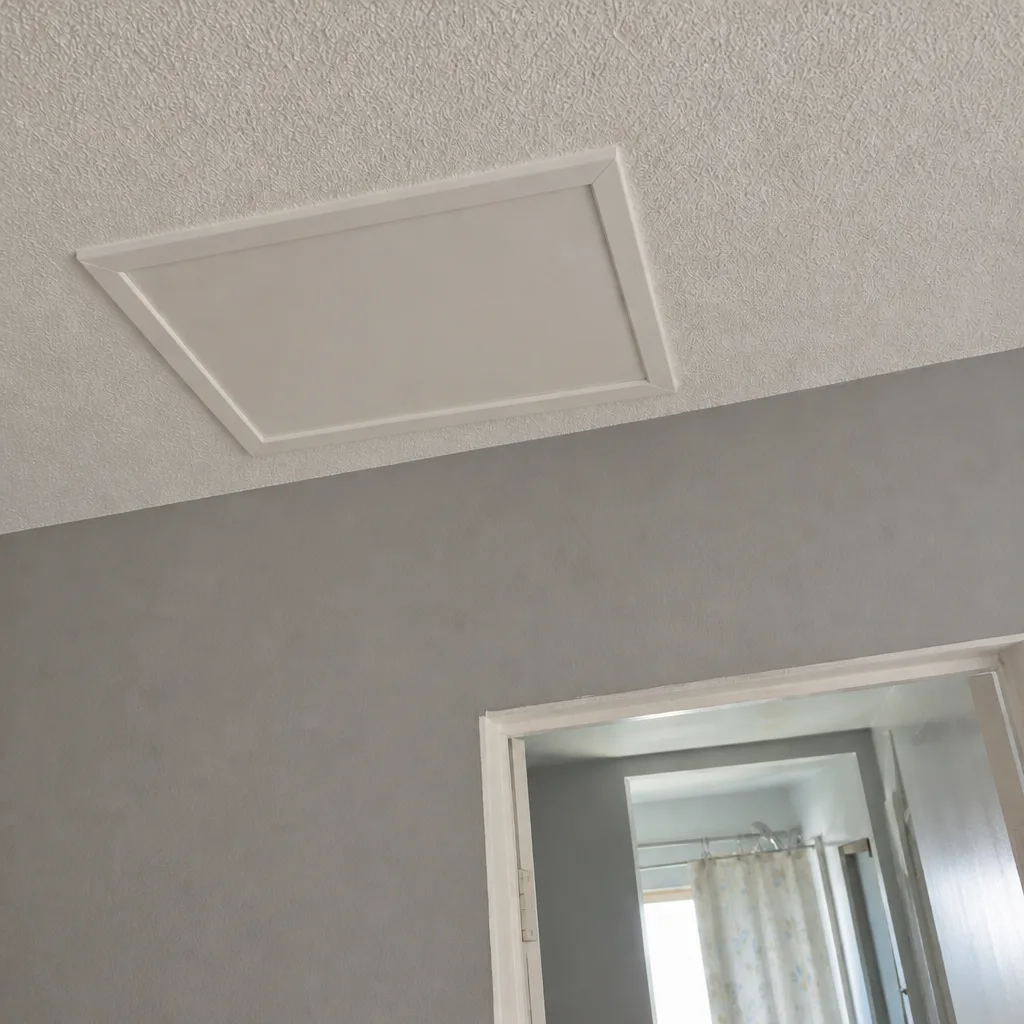 After
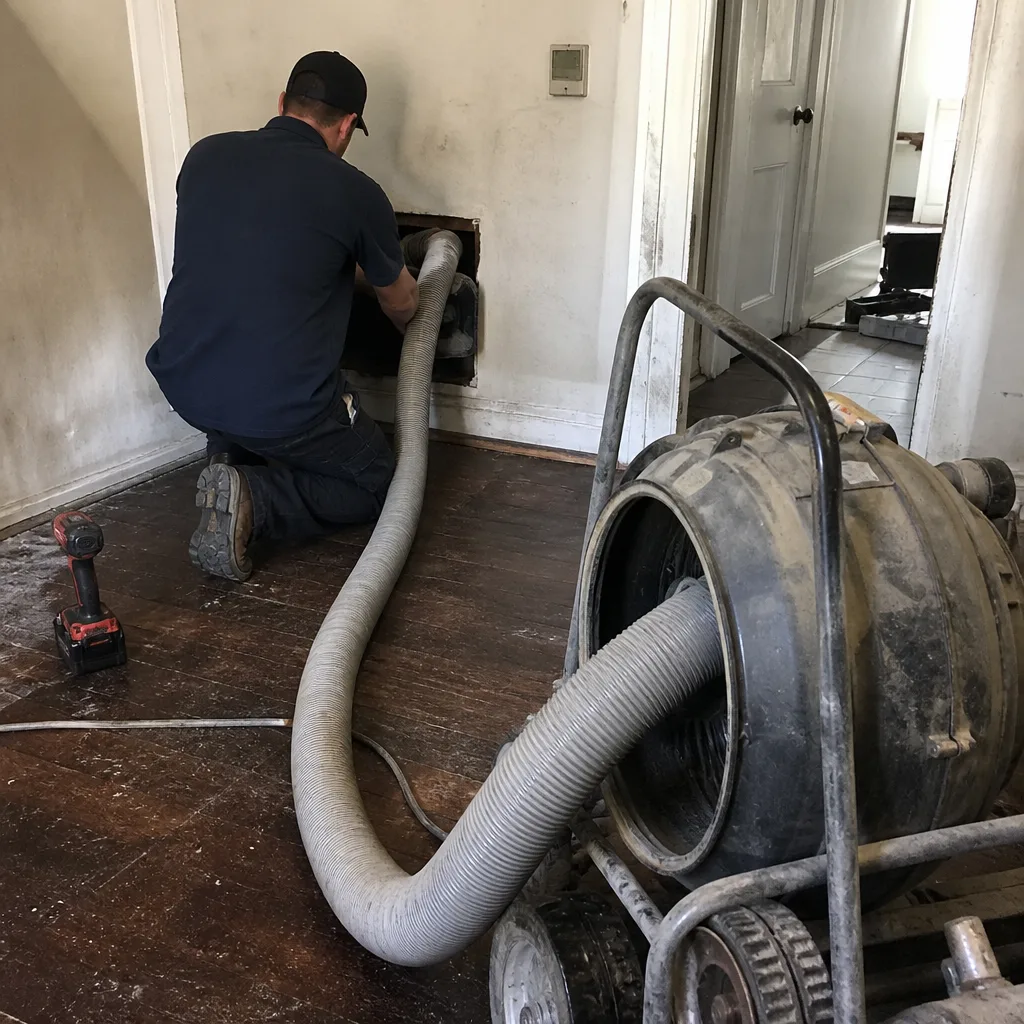 Before
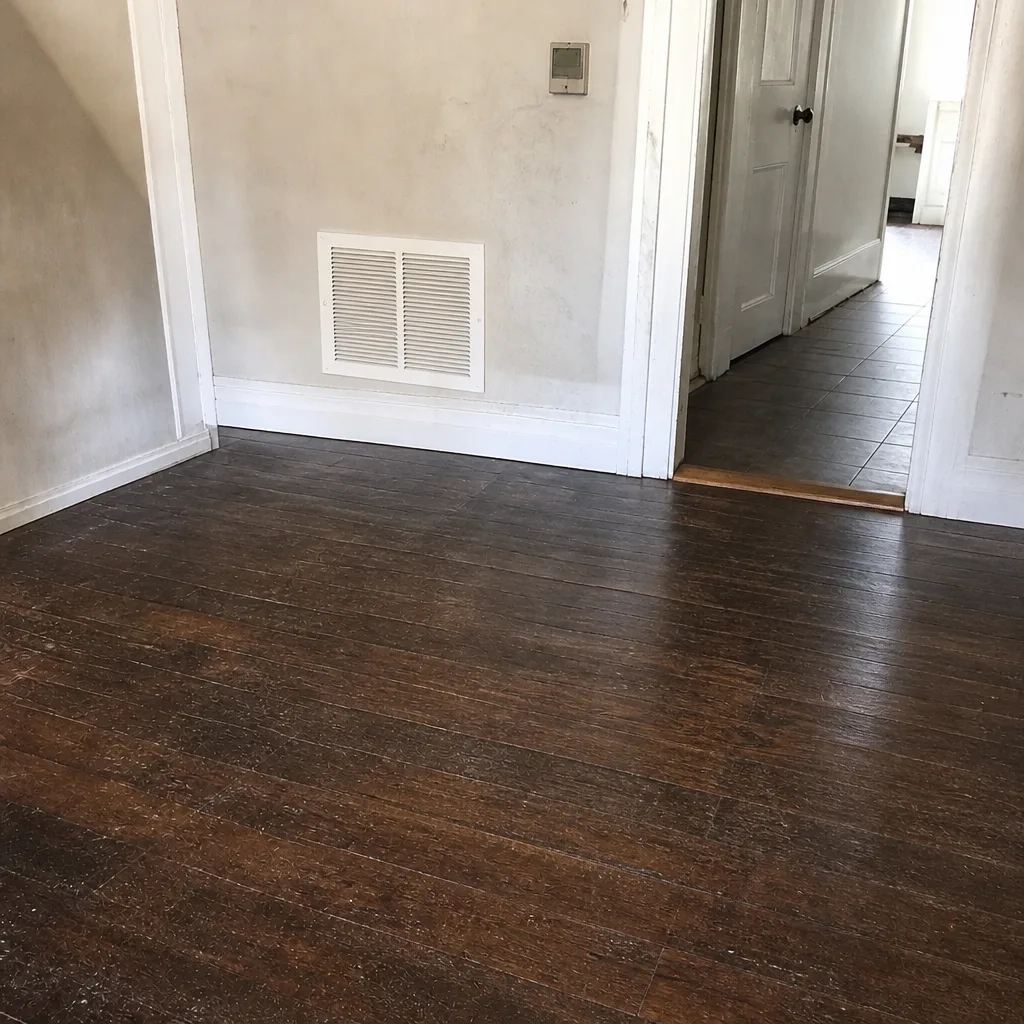 After
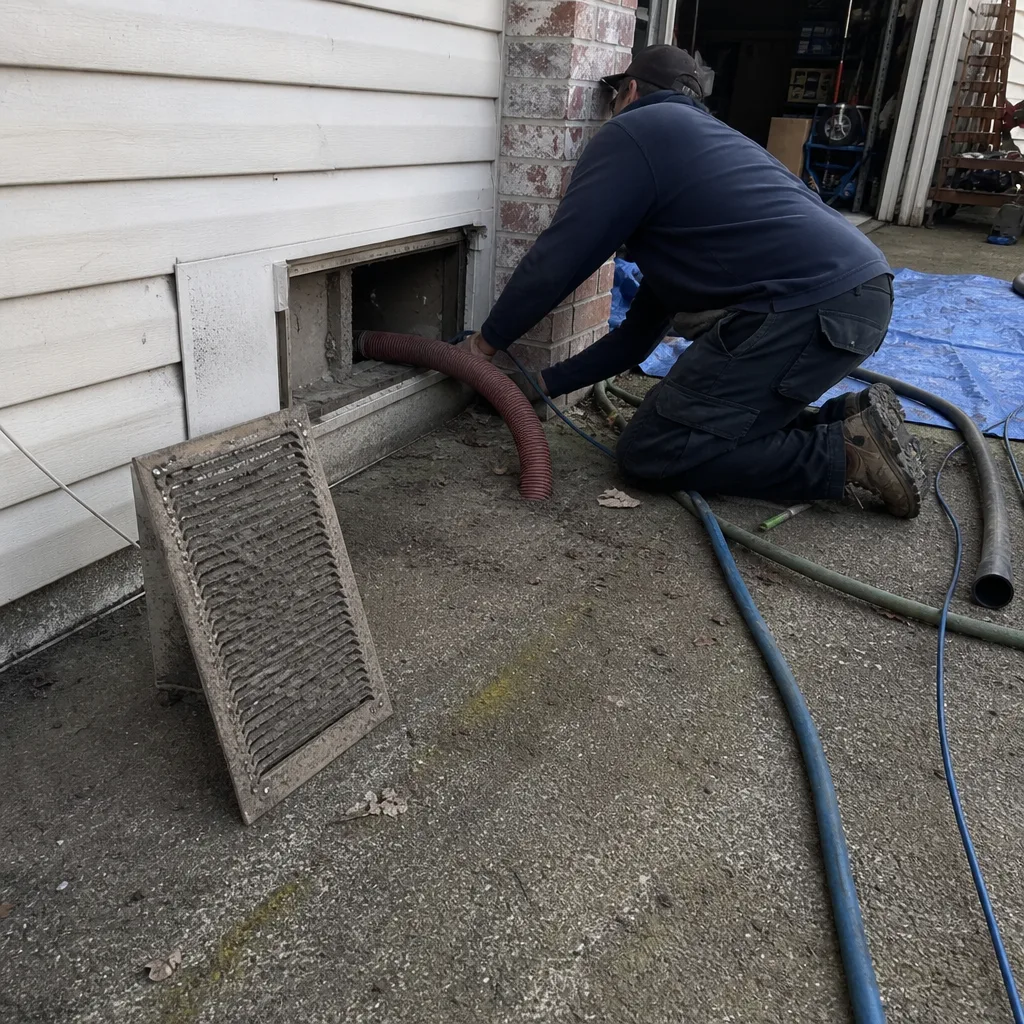 Before
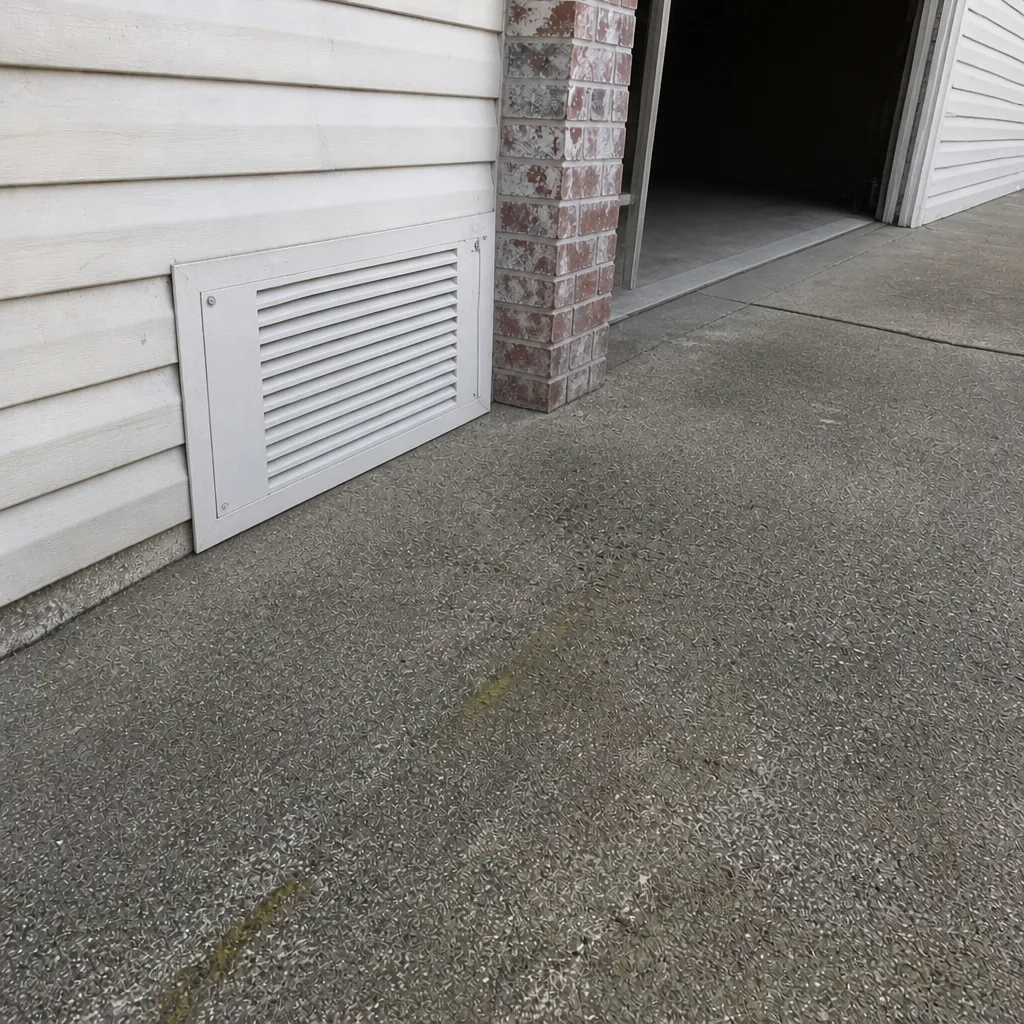 After
Common Mistakes to Avoid
- Assuming it’s the AC when the ducts are the problem. Homeowners in Gresham call HVAC techs for a room that won’t cool, and the tech finds the compressor running perfectly. The duct run above the room is collapsed. Test the registers with the paper test before you pay for a service call.
- Sealing leaks with duct tape from the hardware store. Classic duct tape fails in attic heat within a couple of years and leaves a residue that makes the proper repair harder. Mastic, foil tape rated for ductwork, or a professional seal is the answer.
- Adding a bigger air handler to fix weak airflow. If the ducts are collapsed or leaking, a bigger blower just pushes more air into the attic. It also raises static pressure and shortens the life of the system. Fix the ducts first, then look at equipment.
- Buying a high-MERV filter hoping it fixes air quality. In a leaking duct system, a restrictive filter makes the delivery problem worse. Seal the ducts and check for return-side leaks before adding filtration.
- Ignoring the return side. Most duct troubleshooting focuses on supplies because that’s where the paper test is easiest. Return leaks are just as common in Gresham crawlspaces and cause the moisture and odor symptoms that supplies don’t.
- Repairing one branch and stopping. Duct systems fail together as they age. If a mastic joint has cracked at one connection, the others applied in the same year are on the same clock. A single-joint repair while you’re already in the attic is a shortcut that leads to a repeat visit.
- Skipping the before-and-after verification. A repair you can’t verify isn’t a repair you can trust. Ask for photos of the work, and ask for a paper test or pressure reading after the fix. If a contractor can’t provide either, you’re relying on a verbal report.
When to Call a Professional
There are duct problems homeowners can diagnose and live with, and there are problems that need a professional. Crushed flex in an attic, separated rigid duct at a plenum, and mastic that’s failed across more than two or three joints are all jobs for someone with the right tools – and, in attic and crawlspace work, the right safety protocol. Do not try to repair a supply plenum connection yourself. The air handler is energized, the duct surfaces get hot, and the space is often cramped and poorly lit. Electrical safety matters too, since you’ll sometimes be working near wiring and the air handler’s controls.
Call a professional if any of these are true:
- The whole house is losing airflow, not one room.
- The utility bill has climbed more than 15% without a rate change.
- You smell musty air or sewer-like odor when the system starts.
- You’ve found separated duct in an attic or crawlspace yourself.
- The house hasn’t been inspected since you moved in, and it’s 1970s through 1990s construction.
- You’re moving into a Gresham home where you have no record of prior duct work.
Duct Cleaning Gresham offers free estimates for homeowners in Gresham. We use professional-grade equipment from brands like Rotobrush and Nikro, and we diagnose and repair duct problems on the spot rather than handing you a problem report and walking away. Call (844) 523-1942 for a free estimate. We are licensed and insured, and every job gets one flat price per system agreed before work starts, plus before-and-after photos of your own ducts.
Frequently Asked Questions
Duct repair cost depends on the type of failure and whether the repair is accessible. Reconnecting a separated rigid joint, replacing a collapsed flex run, and resealing mastic across a full system are three different scopes. Call (844) 523-1942 for an exact quote – estimates are free, and the written estimate sets the final price before any work starts.
Yes, and in Gresham that’s often exactly what it is. A single room that runs 5 – 10°F hotter than the rest of the house year after year usually has a collapsed flex duct on that branch or a disconnected boot at the register. The AC is running fine; the air just isn’t making it to the room. A pressure test at the plenum confirms it in under an hour.
If dust returns quickly after cleaning, the duct system likely has leaks that are pulling dirty air from crawlspace, attic, or wall cavities back into the air path. Cleaning alone doesn’t fix leaks; you need to seal the leakage points. A pressure test identifies where the leaks are before you spend money on another cleaning.
Not on a calendar schedule, but on a system-by-system basis. Mastic joints typically last ten to fifteen years before cracking, and flex duct fails on a similar timeline under attic heat. Gresham homes built in the 1970s through 1990s often reach a point where multiple failures appear within a few years of each other, and that’s when a full-system inspection is worth doing. Between inspections, a paper test at the registers every couple of years catches small problems before they become big ones.
Repair first, almost always. Cleaning a leaking duct system just means the debris comes back faster because the leaks pull whatever’s in the crawlspace into the air path. Repair the leaks and the collapsed runs, then clean. Doing it in the other order gets you a cleaner-looking result without fixing the source.
Cheap quotes usually leave out either the diagnosis or the verification. A low number often means the contractor is quoting a single visible fix without testing the rest of the system, or skipping the post-repair pressure check that confirms the fix worked. Ask any contractor for a written scope and before-and-after photos, and get the flat price per system in writing before work starts. If they can’t provide that, the low quote isn’t a real comparison.
The Bottom Line
Air duct problems in Gresham follow patterns, and the patterns reveal the failure type. Hot rooms point to collapsed flex ducts or disconnected boots. Rattles point to loose flex or partially separated rigid duct. Musty air points to return-side leaks. Utility bills climbing without a rate change point to mastic failure across joints you can’t see. Start with the paper test at the registers, and you’ll know within minutes whether the problem is a branch line, the trunk, or the filter. From there the fix is straightforward: replace collapsed flex, reconnect separated rigid duct, reseal failed mastic. If symptoms persist after a proper repair, the layout itself is the issue, and that’s a redesign conversation, not a repair. Either way, knowing what to look for saves you money on the wrong fix first.
Call (844) 523-1942 for a free estimate on duct repair in Gresham. We answer 24/7. Fast dispatch from 7am to 7pm, Sunday through Friday.
Written by the team at Duct Cleaning Gresham.