
Last updated November 15, 2026
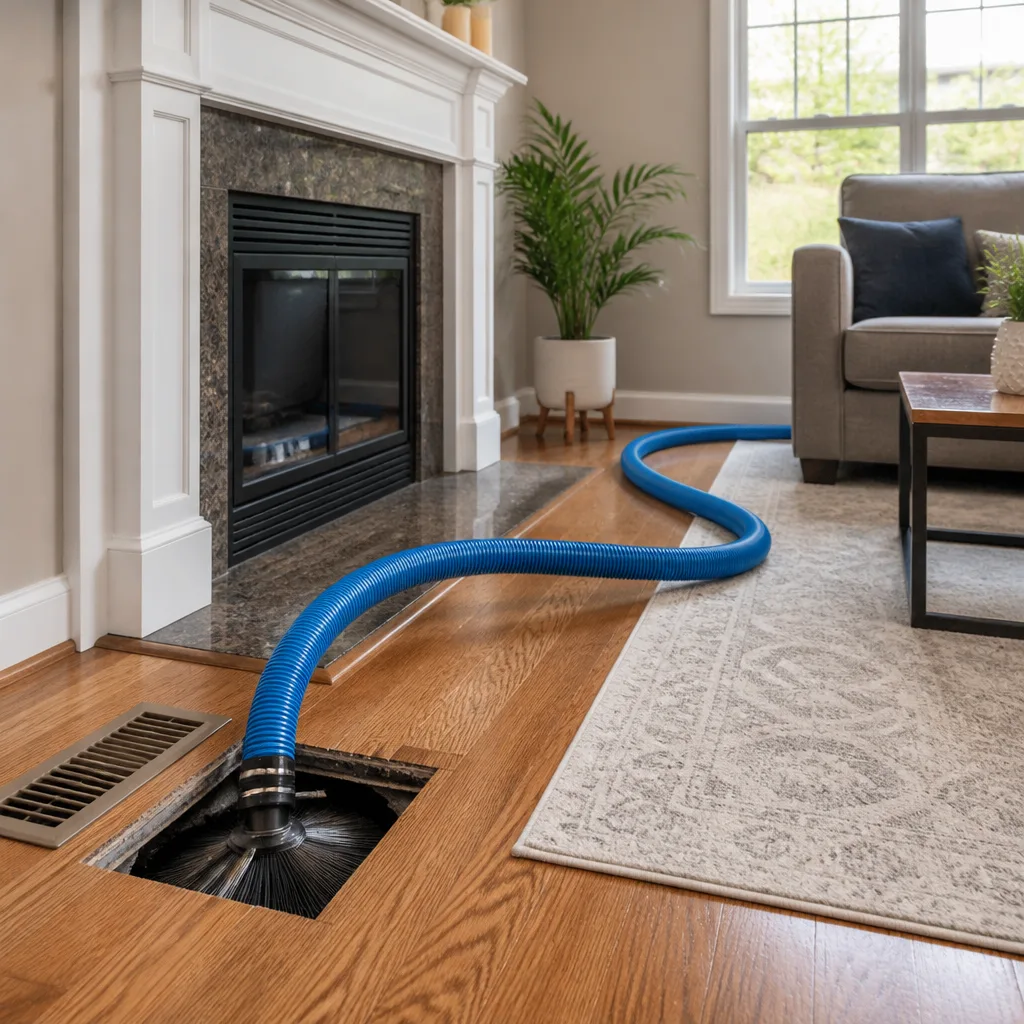 Whole-home duct cleaning
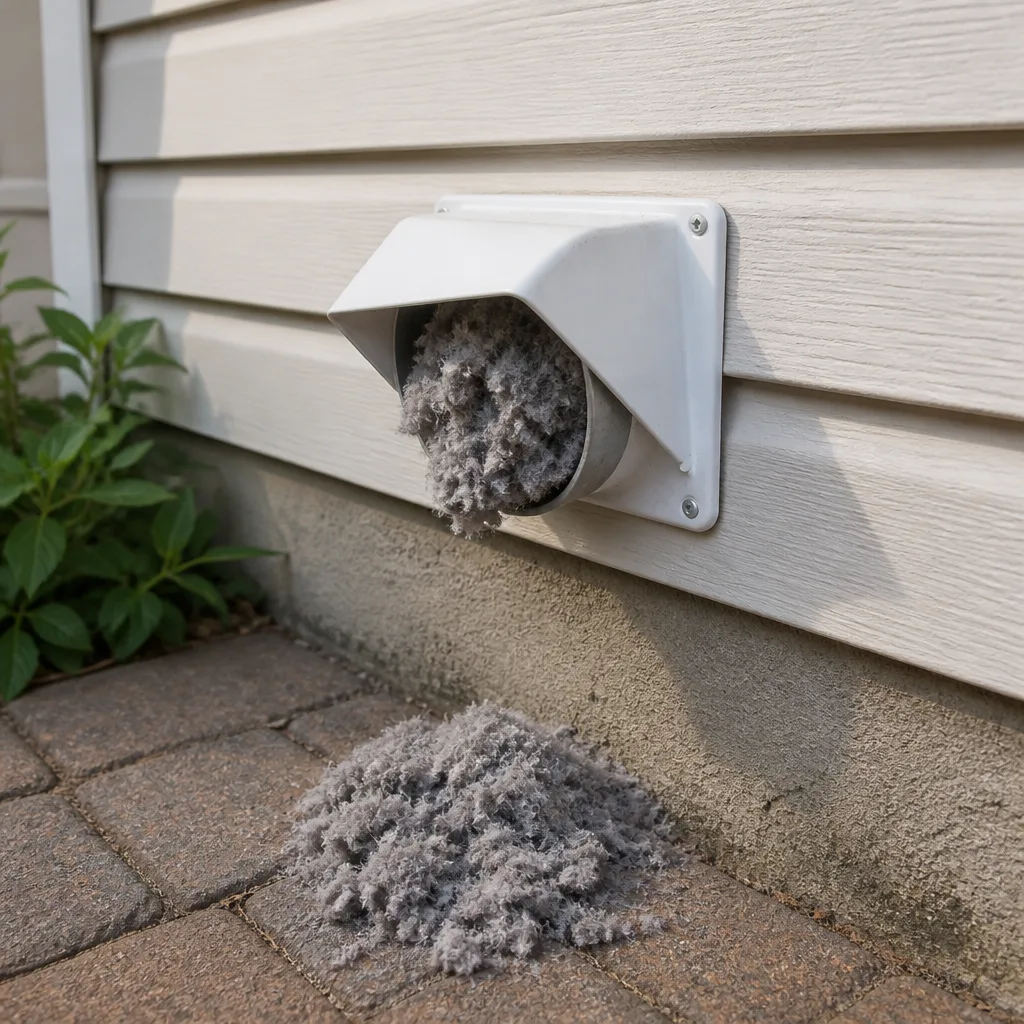 Dryer vent cleaning
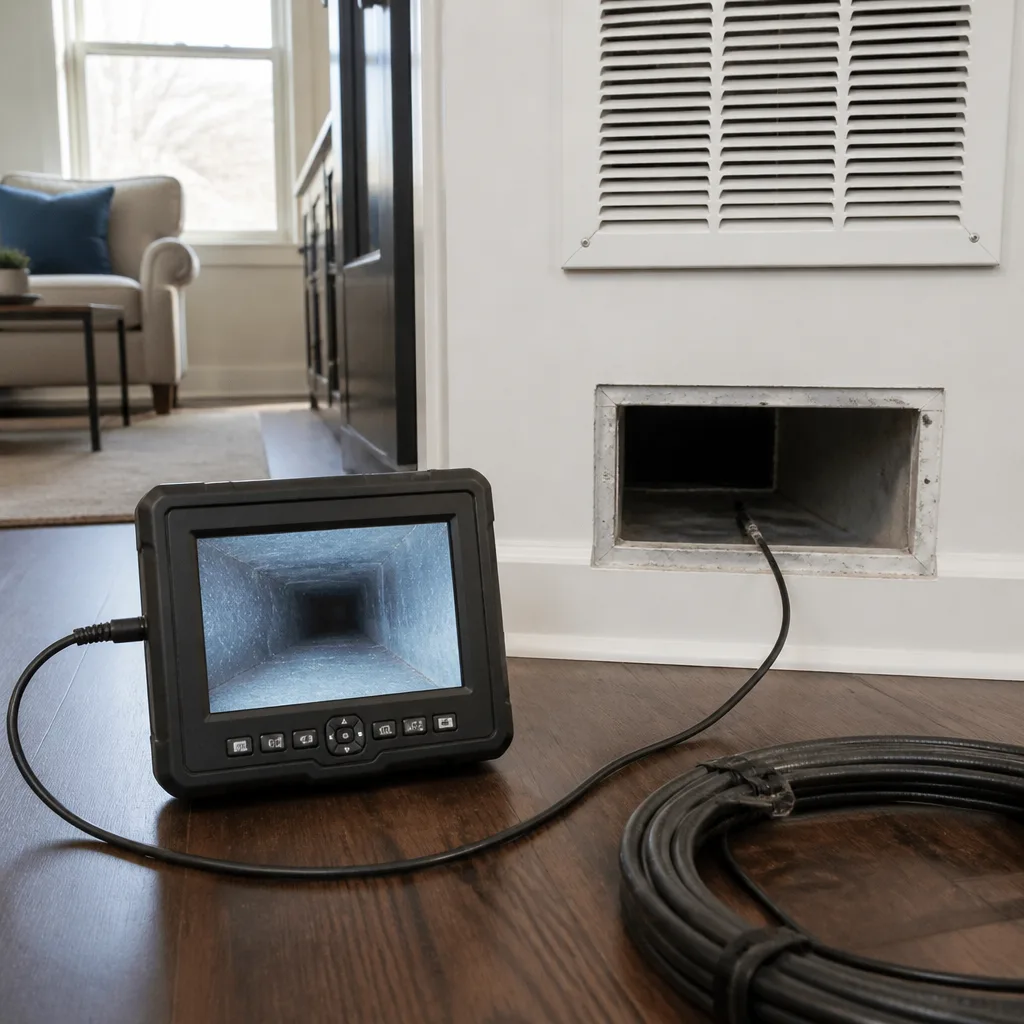 Camera inspection
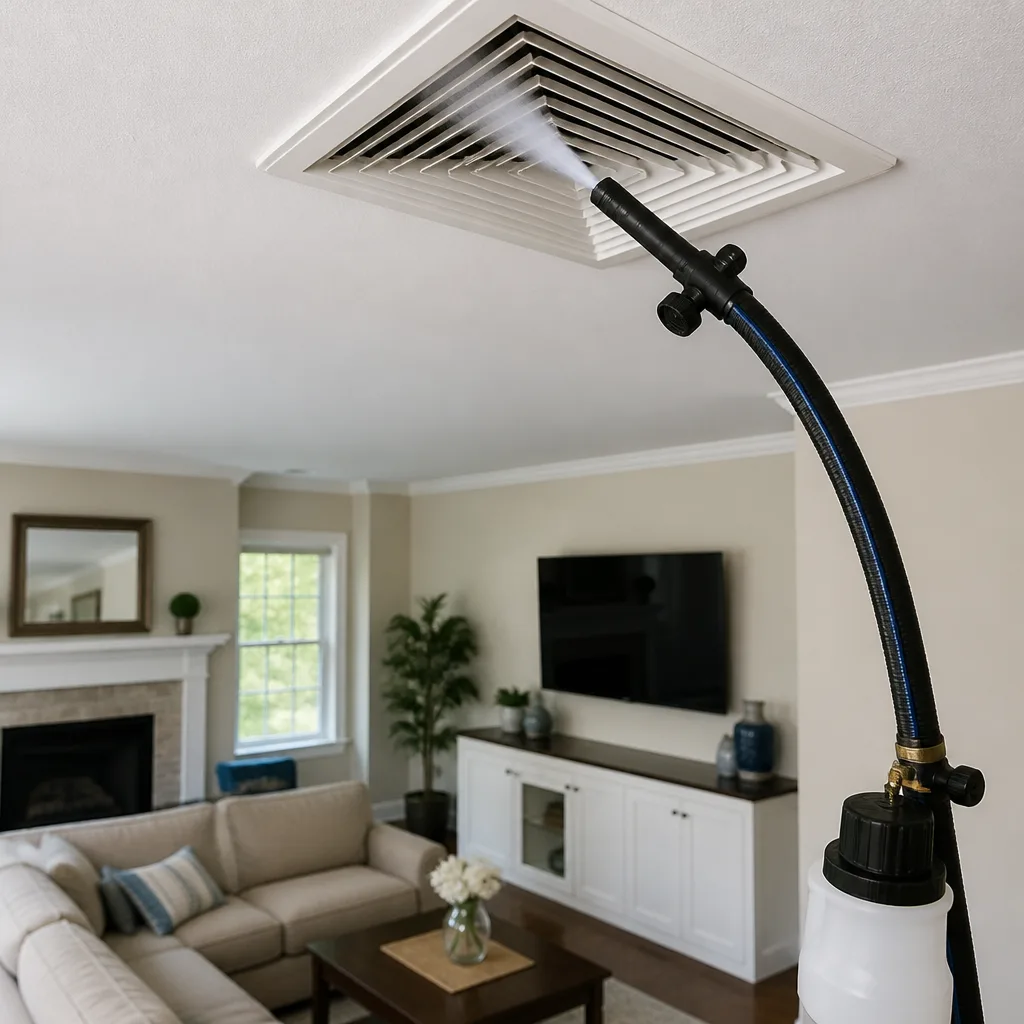 Sanitizing & deodorizing
Whole-system duct and dryer vent check with before-and-after photos - you see exactly what came out of your vents
That "$99 whole-house special" is a bait ad - the real number appears once they are in your hallway, or the "clean" is a shop-vac at the register. We photograph the inside of your ducts before and after instead.
Air Duct Cleaning Cost Breakdown: The Gresham Homeowner’s Reference for 2026
A $99 whole-house duct cleaning offer in Gresham covers roughly 90 minutes of labor with a shop vac. The equipment a real cleaning job requires costs more per day to own and run than that quote brings in, which tells you something about what the $99 is actually for: it’s a negotiating opener. The technician who arrives has to turn that number into a bigger one on the driveway. This guide breaks down what legitimate duct cleaning pricing is built from in Gresham, how the work is scoped, which add-ons are worth paying for, and how to compare two bids that look identical on paper but aren’t.
Quick Answer
Air duct cleaning in Gresham typically costs between $450 and $1,200 for a whole-home system, with most single-family homes landing in the $550 to $850 range. The price is driven by register count, duct material and access, and how much debris the supply, return and plenum runs are holding, not by square footage. Any flat offer below about $300 for a full house isn’t a price; it’s an appointment for a pitch.
Styles & brands we work with
- Whole-home duct cleaning
- Dryer vent cleaning
- Camera inspection
- Sanitizing & deodorizing
Table of Contents
- What actually drives the cost of duct cleaning
- Equipment costs baked into a legitimate quote
- Why square footage pricing misses the point
- Service scope: what’s included and what isn’t
- Add-ons worth paying for and add-ons that aren’t
- How to compare two bids
- When cleaning turns into a repair
- Common mistakes to avoid
What Actually Drives the Cost of Duct Cleaning?
Register count and duct material drive the cost of duct cleaning far more than how big the house looks. A 1,800-square-foot single-story ranch in Gresham with 14 floor registers and a long trunk line in a crawlspace is a meaningfully different job from a two-story in the same square footage with 9 ceiling registers and short, tight runs. The first takes longer to access, longer to clean, and requires more negative-pressure hose placement. The second is faster but often involves more vertical runs and a different set of tools to get into ceiling boots.
In our experience across Gresham homes, four variables set the real scope of a job:
- Register count. Every register is a separate access point, a separate boot to clean, and a separate branch of ductwork to pull debris from. Register count between 8 and 20 is the single biggest predictor of labor time.
- Duct material. Galvanized sheet metal is the most workable. Flex duct requires gentler tooling and more time. Rigid fiberglass ductboard is the most delicate of the three and needs a technician who knows how to clean it without shredding the interior lining.
- Access. Attic runs, crawlspace trunks, and packed mechanical closets all add time. Gresham’s older housing stock, particularly the older neighborhoods around downtown and near Main Street, has more crawlspace ductwork and tighter retrofits than the newer subdivisions on the east side.
- Debris load. A system never cleaned since a 1990s remodel is a different job from a system cleaned a handful of years ago. Pet hair, drywall dust from renovations, and construction debris in return plenums can multiply cleaning time, especially in homes that went through a kitchen or bathroom remodel recently.
If you want a rough typical range for a whole-system clean in Gresham by scope:
| Scope | Typical estimated range | What it usually covers |
|---|---|---|
| Condo or small single-story, 6 – 9 registers, easy access | $350 – $500 | Supply and return cleaning, one trunk, standard negative-pressure setup |
| Typical single-family (ranch or split-level), 10 – 16 registers | $500 – $850 | Full supply and return, plenum cleaning, register and boot wipe-down |
| Two-story or larger with crawlspace trunk and attic runs, 17+ registers | $850 – $1,200 | Multi-zone supply and return, mechanical closet access, plenum and coil-adjacent cleaning |
| System with heavy debris, post-remodel or extended neglect | Add $150 – $400 | Additional negative-pressure passes, aggressive agitation, longer cleanup |
| Dryer vent cleaning (separate service) | $125 – $225 | Full vent run, lint removal, exterior termination check |
Those numbers are estimates. The written estimate sets the final price, and it should be built per system, not per vent. Whenever you see a per-vent price on a duct cleaning quote in Gresham, ask what happens when they count your registers differently at the door. That’s how $99 becomes $1,400.
What Equipment Costs Are Baked Into a Legitimate Quote?
Professional duct cleaning equipment has real operating costs, and those costs show up in any honest bid. The main pieces:
- Truck-mounted or high-capacity negative air machine. This is the machine that puts the whole duct system under negative pressure so debris gets pulled into a HEPA-filtered collection unit instead of venting into your living room. A truck-mount runs off a diesel or PTO-driven blower; a portable high-capacity unit runs on its own dedicated motor. Both cost far more to buy, maintain and fuel than a shop vac, and both are non-negotiable for a legitimate clean.
- HEPA filtration. The exhaust air leaving the negative air machine has to be filtered, or you’re just moving dust from the ducts into the house. HEPA-grade filtration is the standard for any professional-grade setup.
- Agitation tools. Rotary brush heads, whips, and air-jet nozzles. Rotobrush and Nikro both make the industry-standard systems HVAC and restoration crews rely on. Different duct materials require different heads; a legitimate operator brings more than one.
- Camera inspection gear. A borescope or inspection camera is how a technician confirms what’s actually in the duct before quoting and after cleaning. It’s also how you and the technician see the before-and-after state of the interior of the runs.
- Registers, boots, and access port work. Cutting clean access ports into ductwork and sealing them afterward takes time, tape, and the right technique.
Consider what a professional-grade setup actually costs in labor hours. Setup and teardown for a full-house clean on a two-story Gresham home is often 45 minutes on its own before the first register gets touched. That’s before the cleaning time, before the cleanup, before the walkthrough. A crew that quotes $99 is either skipping the setup, skipping the negative air machine, or planning to find money somewhere else once they’re inside.
The equipment line in the industry is also what separates a cleaning-only outfit from an air duct cleaning provider that can actually fix what it finds. Our technicians work with professional-grade systems from Rotobrush and Nikro, and we also stock and work with Honeywell and Aprilaire filtration products plus Abatement Technologies and Guardsman gear. That matters on the pricing side because a clean job that uncovers a disconnected flex run or a crushed trunk doesn’t turn into a second appointment with a different contractor.
Why Square Footage Pricing Misses the Point
Square footage is a poor predictor of duct cleaning complexity. Two Gresham homes at 2,000 square feet can vary by $400 on the same service because what matters isn’t the floor area, it’s how many registers the system serves, what the ducts are made of, and how accessible the trunk and plenum are.
Here’s what’s actually more predictive than square footage:
- Register count. 8 registers is a fundamentally different job from 18, even in the same footprint. Register count is the closest thing to a fair measure of labor.
- Number of zones. A dual-zone system with a separate upstairs air handler is two systems to clean, not one. Bids that price by square footage often miss the second zone entirely until they’re on site.
- Duct material mix. Homes with a mix of rigid trunk and flex branch runs, or with ductboard in part of the system, take more tool changes and more care than a pure metal system.
- HVAC equipment location. A mechanical closet inside the house vs. a garage-mounted air handler vs. an attic unit affects hose routing and setup time.
- Return duct design. Older Gresham homes sometimes have panned joist returns with no true return ductwork, which changes how cleaning is approached entirely and how much dust ends up where.
The right way to scope a duct cleaning quote is register count plus duct material plus number of systems. Any quote that asks only for square footage and a zip code is a quote built on an average, and averages tend to be wrong in both directions. The written estimate should reflect your actual system, not a calculator spreadsheet.
Service Scope: What’s Actually Included and What Isn’t
Service scope is where two quotes at similar prices hide enormous differences. Ask specifically what gets cleaned, and confirm it in writing.
A complete duct cleaning scope for a Gresham home usually includes:
- All supply registers and boots
- All branch supply runs
- The main supply trunk
- All return registers and boots
- The return trunk
- The air handler plenum (the box that connects the HVAC unit to the ductwork)
- Wipe-down of register covers and visible boots
- Borescope inspection before and after
- Before-and-after photos of your own ductwork
What a “cleaning” quote below about $300 typically does not include: the plenum, the return trunk, or any of the branch runs beyond a surface vacuum of the visible register. Those are the parts of the system that hold the most debris, and they’re the parts most likely to be skipped when the price was set at the door.
We put one flat price per system together before work starts, and we don’t do per-vent pricing. Before-and-after photos of the interior of your ducts are part of the finish, not an extra, because otherwise you have no way to know the work was done. If the quote you’re comparing doesn’t include photos, add that to the list of questions.
Add-Ons Worth Paying For and Add-Ons That Aren’t
Some add-ons are legitimate and earn their place in the invoice. Others are low-value upsells dressed up as necessities.
Add-ons that are legitimately worth it
- Dryer vent cleaning. Lint accumulates in dryer vents, and clogged vents are a leading cause of residential fires. Manufacturer guidelines and fire-safety standards vary, but the general guidance is annual for most households. Our dryer vent cleaning service handles the full run and the exterior termination check. If you’ve never had yours cleaned, or the dryer takes two cycles to dry a load, it’s worth doing.
- Sanitizer or antimicrobial application after confirmed biological growth. If a borescope inspection actually shows mold or significant microbial growth on duct surfaces, a sanitizer application after cleaning is a sensible step. The key is “confirmed by inspection.” If a technician recommends sanitizer before ever looking inside the ducts, that’s a sales script, not a diagnosis.
- Duct repair. Disconnected flex sections, crushed trunk runs, and torn ductboard are common findings in Gresham homes, especially older stock. Repair is worth it because a leaky duct system wastes energy and pulls unfiltered air back into the supply side. Fixing a known problem is not an upsell.
- Filtration upgrades. If your furnace filter cabinet can accept a media filter from Honeywell or Aprilaire, upgrading from a low-MERV filter to a proper media filter is a reasonable spend. Ask the technician to walk through the specific filter change and confirm the cabinet fit before deciding.
Add-ons that typically aren’t worth it
- Whole-house fogging “disinfection.” Spraying a cloud of product into the ducts is not the same as cleaning them and rarely produces a measurable result. The cleaning itself does the work.
- UV lights sold as a first step. If the ducts are dirty, a UV in-duct light does nothing about that. UV has its place when properly spec’d for the application, but it isn’t a substitute for cleaning.
- Repeated “reactivation” visits. Some crews sell a follow-up visit at a “discount.” If the initial clean was done right, there’s nothing to reactivate.
How Do You Compare Two Duct Cleaning Bids That Look Similar?
Two bids can land at the same price and be wildly different. Here’s how to compare them in five steps:
- Ask for the scope in writing. Every register, every return, the trunk, the plenum, and the branches should be listed. If the scope line just says “whole house,” get specific.
- Ask what equipment is used on site. Negative air machine, HEPA filtration, rotary agitation, borescope. If the answer is a shop vac and a leaf blower, the same-price bid is not the same service.
- Ask about per-vent vs. per-system pricing. A per-vent price is the tell. A per-system flat price agreed before work starts, with no door-price adjustments, is the pattern to want.
- Ask for before-and-after photos as part of the deliverable. Written into the quote, not promised verbally. Photos of your ductwork, not stock images.
- Ask what happens if they find a problem. Disconnected flex, crushed trunk, torn ductboard. If the answer is “we’ll let you know and you can call someone,” that’s a cleaning-only operation. If the answer is “we repair it in the same visit,” that’s a full-scope provider, and the scope you’re paying for is genuinely different.
Do this comparison while you have both bids in front of you, before you sign anything. If a bid at the same price doesn’t survive these five questions, the price wasn’t the same thing.
One detail worth knowing as you compare: our technicians have up to 15 years of experience. That shows up most often in how a job is scoped on site, how a ductboard run is handled vs. a flex run, and how a repair gets designed when a trunk has been crushed. It also shows up in the finish: sealing access ports correctly, wiping boots, and leaving photos that actually show what was done.
When Cleaning Turns Into a Repair (And How That Changes the Price)
Air duct repair often belongs on the same invoice as cleaning, and that’s a price conversation worth having before work begins. In Gresham homes we routinely find four classes of problem during a cleaning:
- Disconnected flex runs. A branch duct separated from its boot or from the trunk, dumping conditioned air into a crawlspace or attic instead of into the room. Common in older remodels and DIY retrofits.
- Crushed or kinked ductwork. Especially with flex, where the run was zip-tied tight against a joist or run around a corner too sharply.
- Torn ductboard liners. Rigid fiberglass duct with the interior lining compromised, which means the fiberglass itself is now going downstream into the home.
- Leaky trunk seams. Seams that were taped decades ago and have long since failed. Leaky returns pull unfiltered air (crawlspace air, attic air) into the system.
If the cleaning technician can fix these in the same visit, the price of the cleaning plus the repair is usually lower than the price of cleaning plus a second contractor plus lost time. That’s part of why we offer duct repair as a standard service rather than handing over a problem report and walking away. The written estimate for a repair should be given before the repair is done, just like the cleaning.
If you’re not sure whether your duct issue needs repair or just cleaning, the right answer is a free estimate in Gresham that includes a borescope look inside the system. You don’t have to guess.
Common Mistakes to Avoid
- Signing off on a price set at the door. If the number being offered changes when the technician arrives, that’s the pitch, not a quote. Get the per-system price in writing before the appointment.
- Choosing a bid on price alone. A $300 bid and a $700 bid aren’t the same product. Compare scope, equipment and included items before comparing the number at the bottom.
- Skipping the borescope inspection. A clean without a camera-based look before and after is a clean you can’t verify. Insist on inspection as part of the job.
- Believing “cleaner air” claims without knowing the equipment. Air quality outcomes come from a properly scoped clean, not from a fogging product sprayed into a dirty system.
- Ignoring the dryer vent because the ducts got cleaned. They’re separate systems and separate fire risks. A duct cleaning invoice doesn’t cover your dryer vent.
- Assuming newer homes don’t need it. Gresham’s newer construction on the east side often has tight, builder-grade flex that catches construction debris from the build. Ductwork from a recent build is often dirtier than a 15-year-old system, not cleaner.
- Not asking what happens if a repair is found. A cleaning-only crew that hands you a problem report is handing you a second contractor appointment. Ask before the job starts.
See the difference
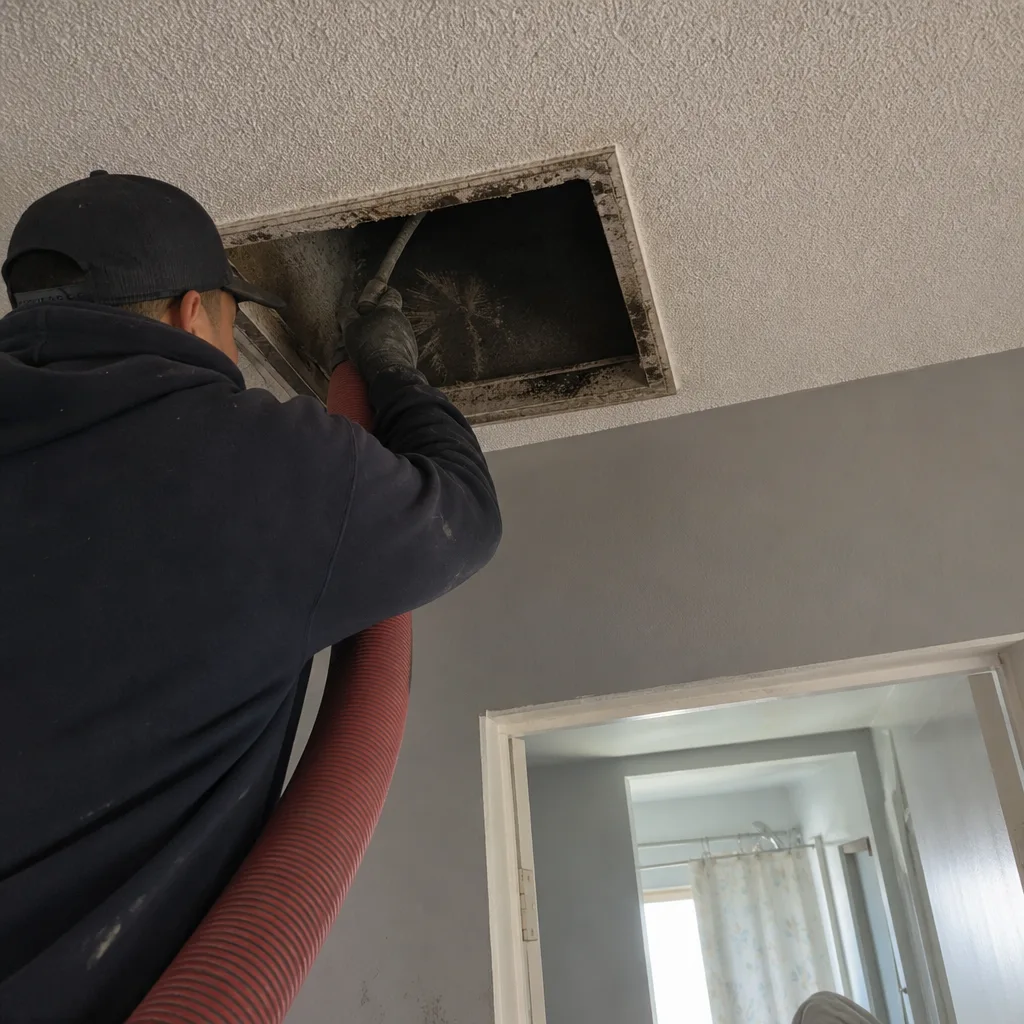 Before
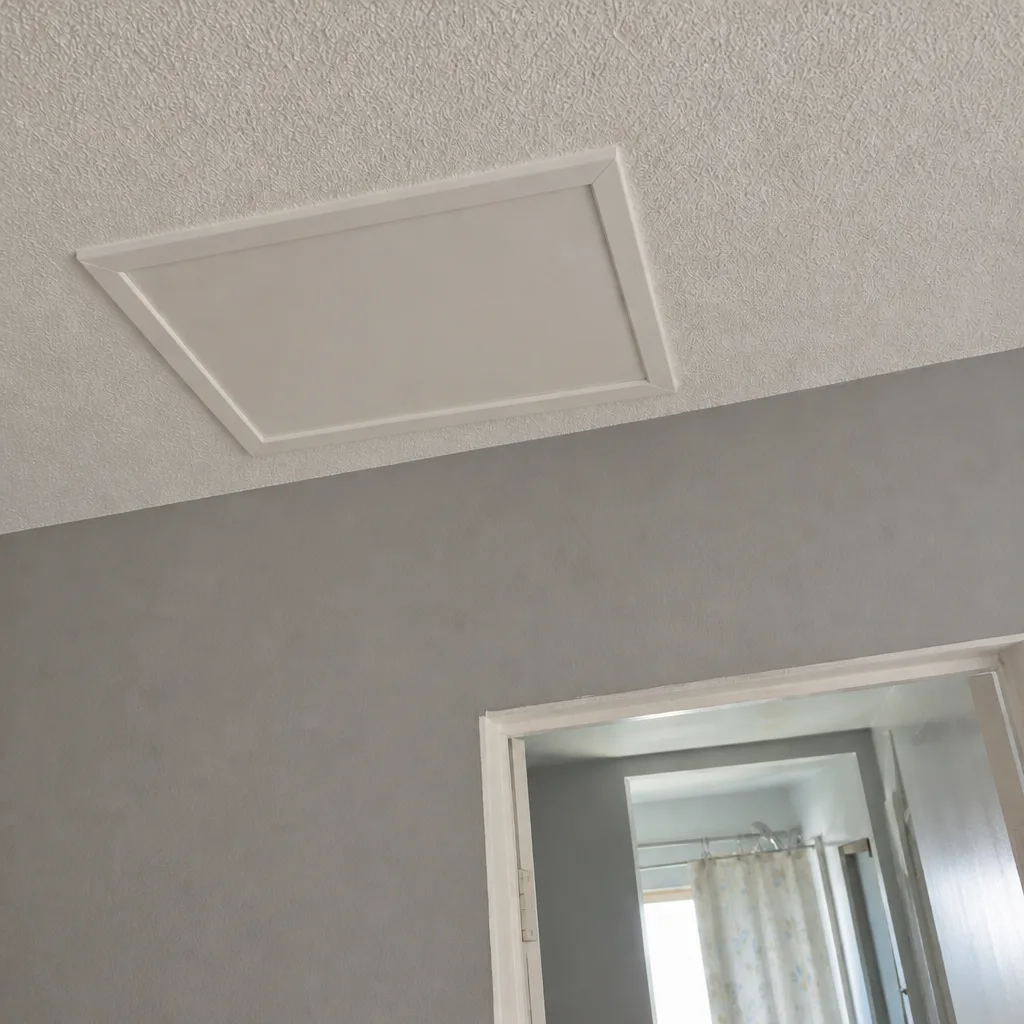 After
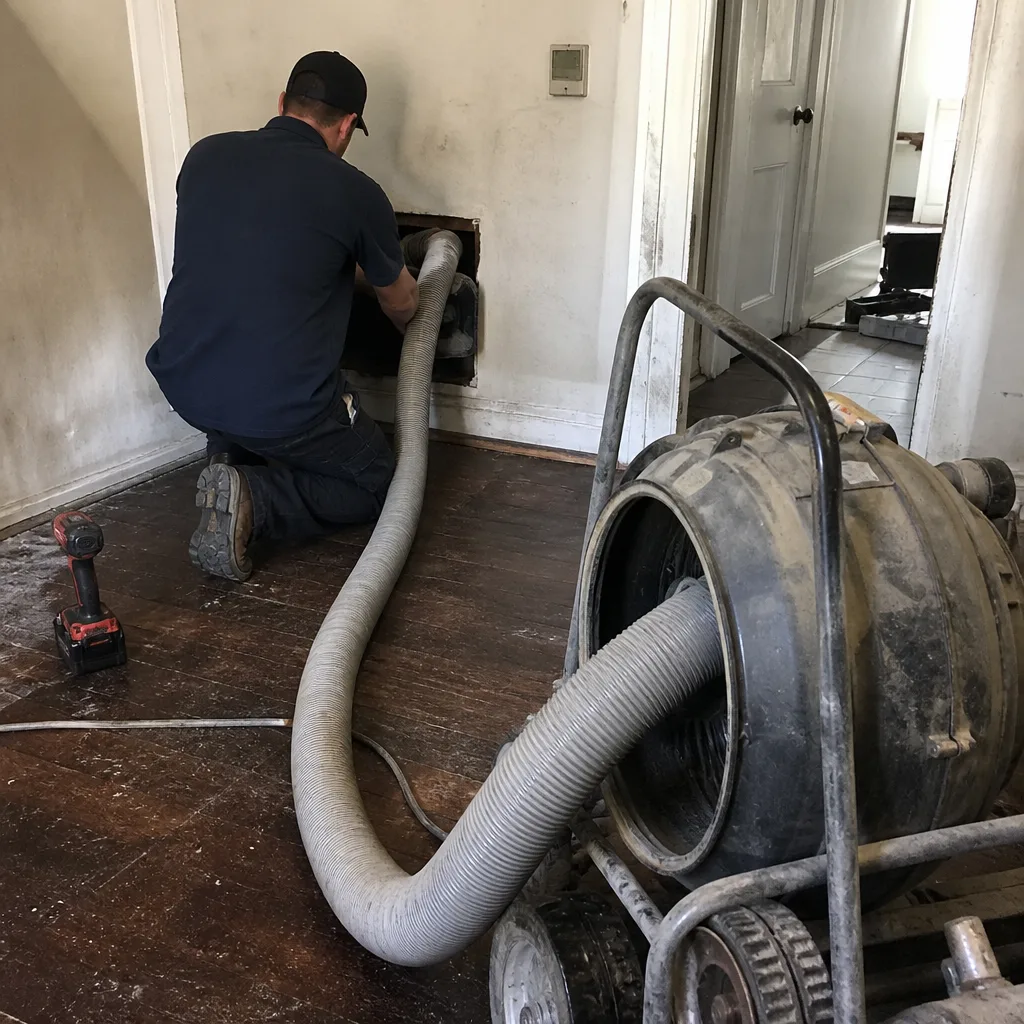 Before
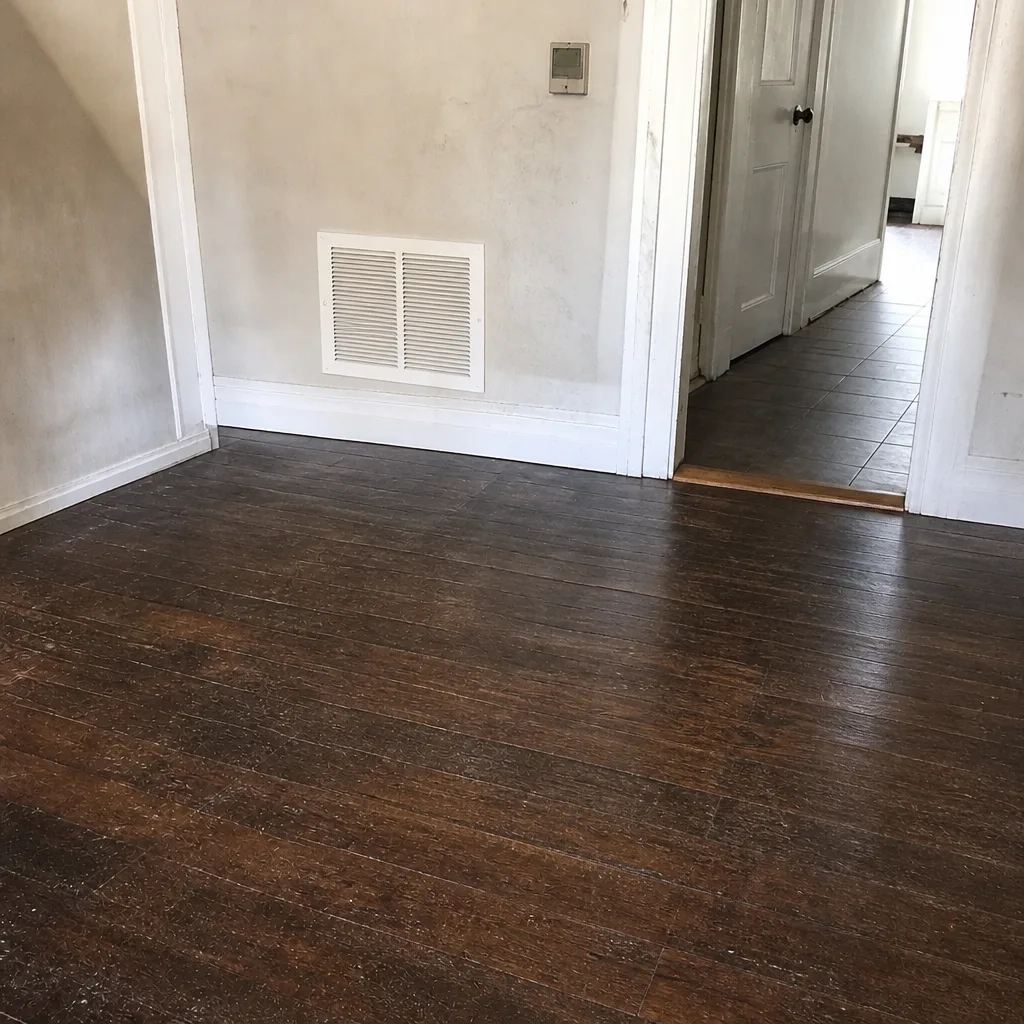 After
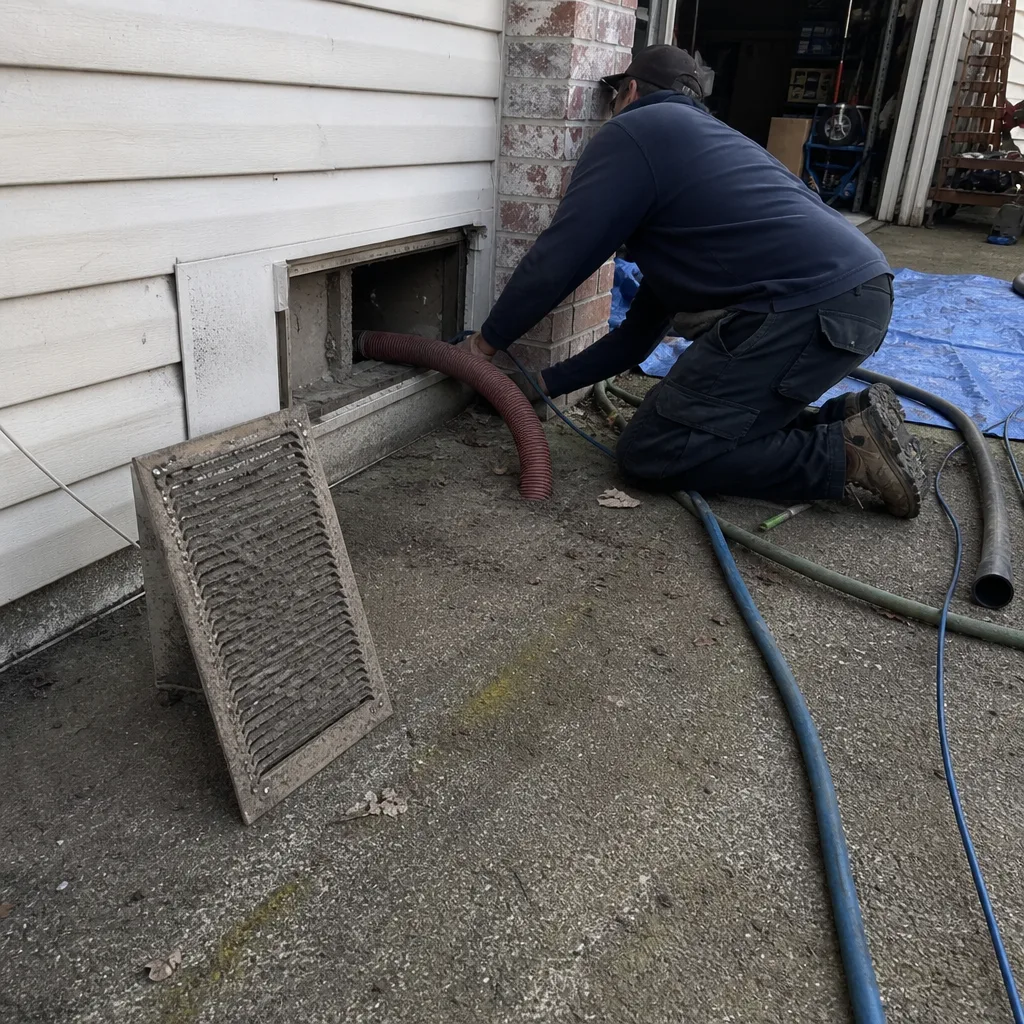 Before
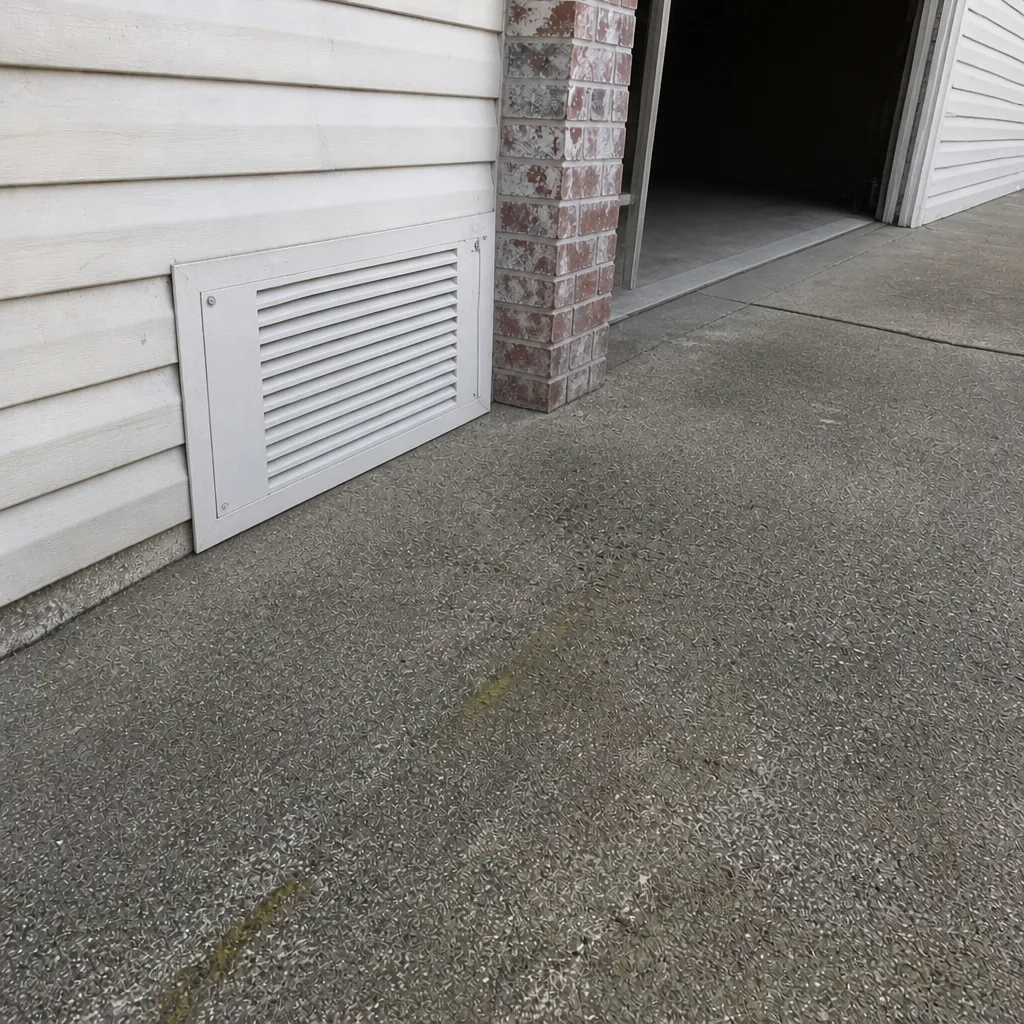 After
When to Call a Professional
Call a professional duct cleaning service when you notice visible dust blowing from a register when the heat or AC kicks on, when anyone in the home has allergy flare-ups that track with HVAC use, after a major renovation that generated drywall dust, when a duct inspection has never been done and the home isn’t new, or when you see mold or moisture inside the ductwork or a disconnected run in the crawlspace. If your dryer takes more than one cycle to dry a load, that’s a dryer vent flag rather than a duct flag, and it’s worth scheduling separately.
Duct Cleaning Gresham offers free estimates in Gresham, and we’ll show you what’s actually inside your system with a camera before quoting. Call (844) 523-1942. We answer 24/7. Fast dispatch from 7am to 7pm, Sunday through Friday.
If a call comes in outside dispatch hours, we book it into the next opening, Sunday through Friday, 7am to 7pm. We’re closed Saturday.
Frequently Asked Questions
Air duct cleaning in Gresham typically costs $450 to $1,200 for a whole-home system, with most single-family homes in the $550 to $850 range. The final price depends on register count, duct material, access, and how much debris the system is holding. The written estimate sets the final price, so ask for one per system, not per vent. Call (844) 523-1942 for an exact quote – estimates are free.
A quote far below the typical range is usually a price to get in the door, and it covers a limited scope: often just the visible registers, not the branches, trunk or plenum. The technician then uses on-site findings to move the price up. A real bid is scoped per system before work starts and doesn’t change at the door. Call (844) 523-1942 to compare a scoped estimate against whatever you’ve been quoted.
You know the work was done when you see before-and-after photos of your own ductwork and the technician walks you through what was found and what was cleaned. Borescope inspection before and after is the standard we work to. If a quote doesn’t include photos, add that as a demand before signing. Call (844) 523-1942 – estimates are free.
Most homes in Gresham benefit from a full-system cleaning every 3 to 5 years, more often after a major renovation or if a household has pets or allergy concerns. Homes on the east side with recent construction may need it sooner because of construction dust that settles into the system during the build. When in doubt, a borescope inspection tells you what your specific system actually needs. Call (844) 523-1942 for a free estimate.
No. Duct cleaning and dryer vent cleaning are separate services on separate systems, and a typical duct cleaning quote in Gresham does not include the dryer vent. Dryer vents should be cleaned annually for most households per manufacturer and fire-safety guidance. Call (844) 523-1942 to schedule both at the same visit if you want them together.
If the cleaning crew can repair it, we repair it in the same visit rather than handing you a report and a second appointment. Disconnected flex runs, crushed trunk sections, and torn ductboard liners are the most common findings we see in Gresham, and the repair estimate is given in writing before the work is done. If your current provider can’t repair, that’s a sign you’re dealing with a cleaning-only operation. Call (844) 523-1942 for a full-scope estimate.
The Bottom Line
Air duct cleaning pricing in Gresham is only as honest as the scope behind the number. A legitimate whole-system clean runs $450 to $1,200 for most homes, driven by register count, duct material, access and debris load, and supported by real equipment costs: negative air machines, HEPA filtration, agitation tools, and borescope inspection. Any quote far below that range isn’t a price, it’s an opener. Use the comparison checklist in this guide, ask for the scope and equipment in writing, insist on before-and-after photos of your own ducts, and know ahead of time that repair capability is part of a full-scope provider. One call covers cleaning, repair, and dryer vent safety, and every price is set per job by the written estimate.
Call (844) 523-1942 for a free estimate. We answer 24/7, and fast dispatch runs from 7am to 7pm, Sunday through Friday. We’re closed Saturday. Insured and bonded, with before-and-after photos included and one flat price per system agreed before work starts.
Written by the team at Duct Cleaning Gresham.